How the Cross Became Christianity's Most Popular Symbol
Today, the image of the cross is inseparable from Christianity. It adorns the steeples of churches, hangs around the necks of believers, and even marks the skin of adherents in traditions like those found in Egypt. Each year, during the solemn beginning of Lent, countless Christians receive the cross in ash upon their foreheads. This omnipresent symbol, revered and recognized globally, serves as a powerful emblem of faith, sacrifice, and redemption. However, its journey to this esteemed position was anything but straightforward. Remarkably, for centuries, the very notion of using the cross as a religious symbol was considered offensive, even abhorrent, to early Christians and Romans alike. How, then, did an instrument of brutal execution transform into the most cherished emblem of billions worldwide?
The Paradox of Early Christian Symbolism: Why the Cross Was Shunned
Modern perceptions of the cross often obscure its gruesome origins. For early Christians, the cross represented a deeply shameful and torturous death, one typically reserved for slaves, criminals, and enemies of the Roman state. It was not a symbol of triumph but of public humiliation and agonizing suffering. Consequently, most scholars agree that the cross was largely avoided as a visual representation of Christianity during its formative centuries.
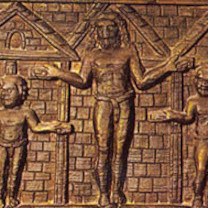
Imagine trying to evangelize using the electric chair or a hangman's noose as your primary identifier today; that level of revulsion encapsulates the early Christian perspective. The idea of associating their divine savior with such a barbaric end was antithetical to the message of hope and resurrection they preached. The earliest surviving public depiction of Jesus’s crucifixion, for instance, is believed to be on the fifth-century wooden doors of Santa Sabina in Rome – a full four hundred years after the event itself. This significant delay highlights a period where the direct depiction of the cross was either taboo or simply not central to Christian iconography. To delve deeper into this historical avoidance, consider reading
Understanding the Cross: Why Early Christians Avoided It.
The Cross in the Roman World: A Symbol of Terror and Humiliation
To fully grasp the early Christian aversion, one must understand the profound horror and disgust the cross invoked in the Roman world. The very word "cross" (
crux in Latin) was considered so vulgar and offensive that Roman orator Cicero noted it sounded harsh to the ears, and St. Augustine later echoed this sentiment. It was a term associated with the most despicable forms of punishment and public degradation.
Consider a graffito discovered in the Stabian baths of Pompeii, where one Roman hurled a truly vile insult at another: "May you be nailed to the cross!" Classical texts are replete with similar curses, illustrating the cross's status as a symbol of utter misery. The Roman playwright Plautus famously used the phrase "go to an evil cross" as slang for "go to hell," underlining its association with extreme suffering and perdition.
Crucifixion itself was a spectacle designed to inflict maximum pain, prolonged agony, and public degradation. It was a tool of social control, a stark warning against rebellion or criminal behavior. While Roman elites rarely witnessed or suffered such a fate, it was unfortunately commonplace for slaves and the lower classes. Cicero's passionate speech against Gaius Verres, a former governor of Sicily accused of crucifying a Roman citizen named P. Gavius, reveals the shock and outrage such an act could provoke when committed against a citizen. Despite Gavius's desperate cries of "I am a Roman citizen," a cross was prepared for him – an "accursed thing" he had never seen before. To further intensify the humiliation, Verres reportedly ordered Gavius to be crucified on the shore facing the Italian mainland, a cruel spectacle for all to behold. This incident underscores that while an abomination for elites, the cross was an everyday dread for others. A slave in a Plautus play grimly remarks on his inevitable fate: "I know that the cross will be my tomb; there my ancestors have been laid to rest, my father, grandfather, great-grandfather, great-great-grandfather." This chilling line illustrates the inherited dread and commonality of crucifixion among the enslaved. The Romans primarily reserved this brutal punishment for serious criminals and rebellious foreigners, making it a powerful instrument of state terror.
The Transformative Journey: From Shame to Sacred
Given its ignominious Roman context, how did the cross undergo such a radical transformation? The shift was gradual, complex, and deeply rooted in theological reinterpretation and pivotal historical events.
One of the most significant turning points occurred in the 4th century with the conversion of Emperor Constantine the Great to Christianity. Legend has it that before the Battle of the Milvian Bridge in 312 CE, Constantine saw a vision of a cross or a Chi-Rho symbol (an early Christian monogram) with the inscription "In Hoc Signo Vinces" – "In this sign, conquer." Following his victory, Constantine legalized Christianity throughout the Roman Empire with the Edict of Milan in 313 CE. This imperial endorsement began to elevate the cross from an emblem of shame to a symbol of imperial favor and divine victory. No longer associated solely with criminals, it started to represent the triumph of a powerful empire under a Christian God.
Theological perspectives also evolved. Early Christians, while acknowledging the horror of crucifixion, began to emphasize not just the suffering but the *redemptive power* of Christ’s sacrifice on the cross. It became the focal point of God’s ultimate act of love and salvation for humanity, transforming the instrument of death into the vehicle of eternal life. The shame associated with the physical act was subsumed by the glory of resurrection and atonement. The cross became the bridge between humanity and divinity, a symbol of ultimate obedience and victory over sin and death.
As Christianity grew and became the dominant religion, the cross evolved into a universal signifier. Pilgrimages to Jerusalem, particularly to sites believed to be associated with Christ's crucifixion, further sanctified the symbol. Relics of the "True Cross" became highly prized, driving its visibility and veneration. Artists and theologians began to depict the crucifixion with increasing frequency, shifting from allegorical representations to direct, albeit often stylized, imagery. This journey, from a despised Roman execution device to a revered emblem of faith, is a profound testament to the power of belief and reinterpretation. For more on this incredible shift, explore
From Roman Shame to Sacred Symbol: The Cross's Journey.
The Enduring Legacy: Modern Expressions of Faith
Today, the cross's journey is complete. It stands not only as the preeminent symbol of Christianity but also as one of the most recognized icons globally, transcending religious boundaries in cultural consciousness. Its various forms—the Latin cross, Greek cross, Celtic cross, Coptic cross, and many others—reflect the diverse traditions and artistic expressions within Christianity.
From grand cathedral facades to humble personal adornments, the cross speaks volumes. It reminds believers of Christ's sacrifice, the promise of redemption, and the hope of resurrection. It serves as a visual declaration of faith, a comfort in times of sorrow, and an inspiration to live a life devoted to Christian principles. For many, wearing or displaying the cross is a daily affirmation of their spiritual identity and a connection to a community that spans millennia and continents. Understanding this profound history enriches one's appreciation for the symbol, moving beyond a simple visual recognition to a deeper spiritual and historical comprehension of its enduring power.
In conclusion, the cross’s transformation from a horrific instrument of Roman state terror to Christianity's most popular and beloved symbol is a compelling narrative of faith, resilience, and theological evolution. What was once universally reviled became universally revered, illustrating the profound capacity of belief to imbue meaning and transcend the limitations of historical context. The cross, in its many forms, continues to be a powerful and unifying emblem, symbolizing sacrifice, salvation, and the enduring hope at the heart of the Christian faith.